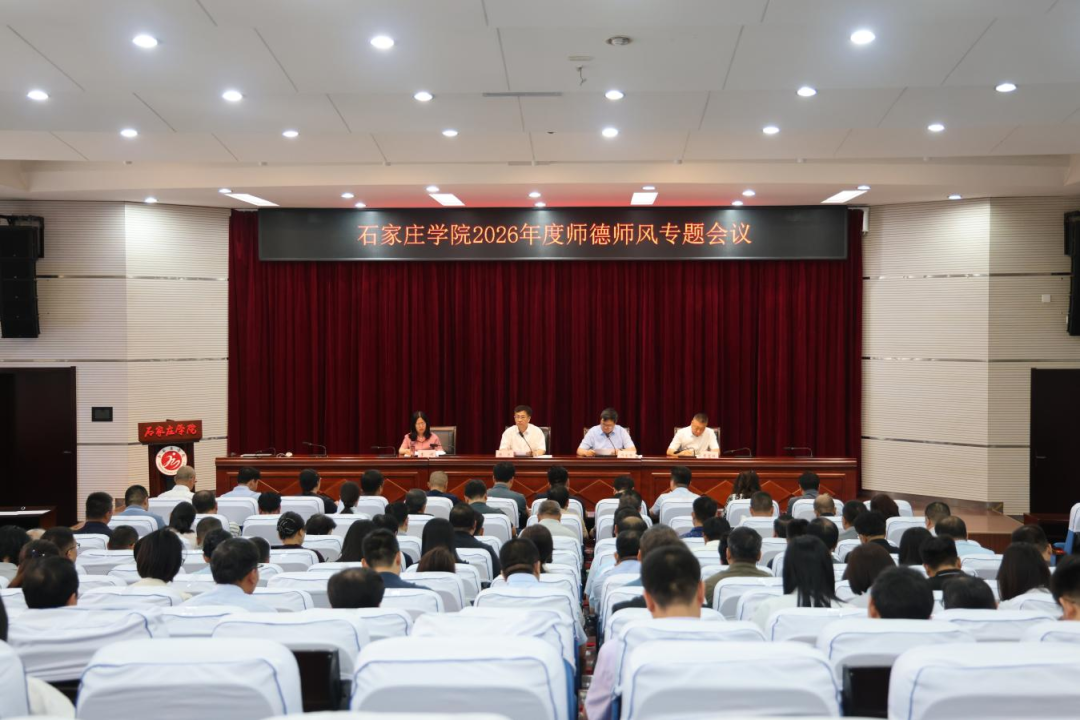
On the morning of May 28, our university convened the 2026 Teacher Ethics and Professional Conduct Conference, accompanied by an expert lecture, in the Second Lecture Hall of the Administration Building. University leaders Chen Liang, Feng Baoqiang, Li Juan, and Li Huilin attended the meeting. All middle-level cadres, as well as faculty representatives from Party general branches and directly affiliated Party branches, participated in the event, which was presided over by Vice President Feng Baoqiang.
In his keynote address, Party Committee Secretary Chen Liang commended the university’s phased achievements in fostering professional ethics among faculty. He noted that the institution has established a responsibility framework under the unified leadership of the Party committee, supported by coordinated efforts across both Party and administrative divisions. A comprehensive long-term mechanism integrating education, assessment, oversight, incentives, and accountability has been refined, alongside regular initiatives on ethics education, role-model selection, and exemplary guidance. As a result, the standardization and routinization of teacher ethics development have steadily improved.
Chen also offered an in-depth analysis of existing shortcomings: in some units, accountability measures lose momentum as they cascade downward, creating a pattern of “enthusiasm at the top, indifference below.” Ethics education formats remain relatively uniform, limiting appeal and effectiveness; mentorship and ideological guidance for young teachers require strengthening; and certain staff members still need to reinforce their awareness of discipline, rules, and self-regulation.
Chen emphasized that the university must firmly uphold political guidance as its guiding principle, treating teacher ethics as the primary benchmark in evaluating faculty quality. The spirit of the educator should be vigorously promoted and practiced, combining strict management with genuine care and support. Priority areas include consolidating political responsibility, deepening ideological grounding, innovating educational approaches, reinforcing exemplary role models, and tightening risk supervision — with particular focus on key domains such as classroom teaching, academic research, teacher–student interaction, and online conduct. Early intervention and prevention are essential, with a strict “zero tolerance” policy toward misconduct, and mechanisms such as “one-vote veto” in professional title evaluation, awards, and honors selection, ensuring firm adherence to ethical bottom lines.
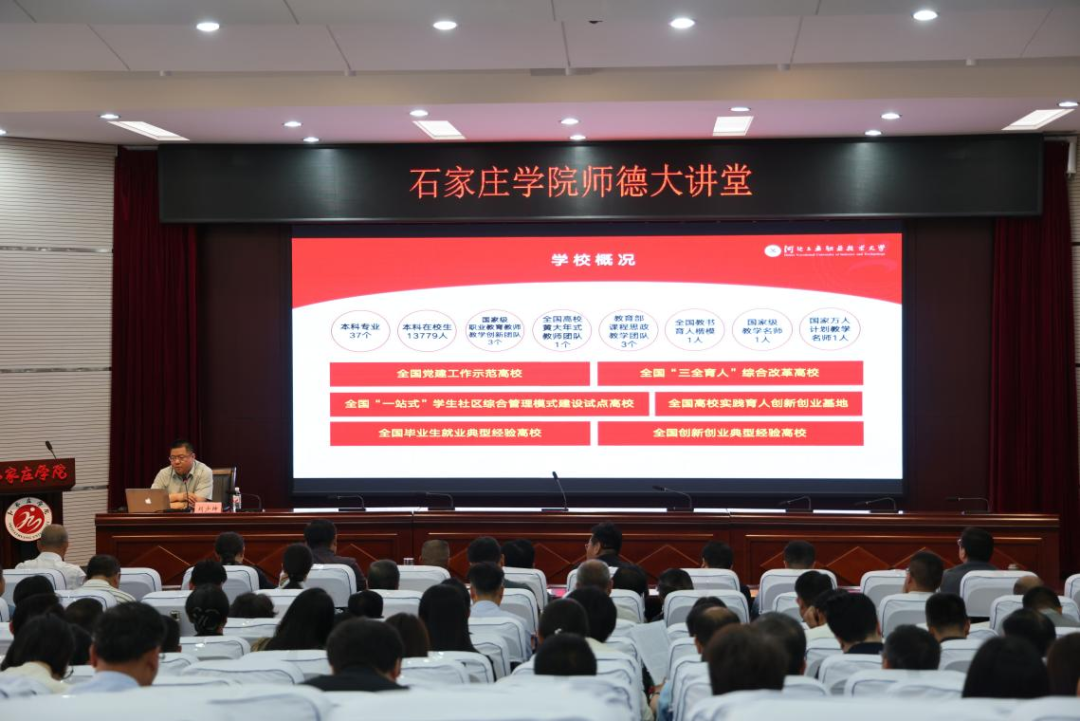
During the expert lecture, Professor Liu Shaokun — Director of the Academic Affairs Office at Hebei Vocational Technical College of Industry, a national-level “Ten Thousand Talents Program” distinguished teaching master, and a National Model Teacher — delivered a talk titled Vigorously Promoting the Educator’s Spirit and Striving to Be a Great Teacher in the New Era. Drawing on profound personal experience in teaching and mentorship, Professor Liu explored the evolution of General Secretary Xi Jinping’s vision for faculty development, the rich connotations of the educator’s spirit, and the code of conduct for teacher ethics. His presentation combined theoretical depth, practical relevance, and inspirational example, offering valuable guidance and vivid demonstration for advancing teacher ethics at our university.
Participants unanimously expressed their commitment to using this conference as a catalyst for further strengthening ethics education, internalizing the educator’s spirit, and putting it into practice — leveraging both moral integrity and professional excellence to contribute to the high-quality development of the university.
(Contributor: Human Resources Office; Editor: Yang Yizhou)
On the morning of May 28, our university convened the 2026 Teacher Ethics and Professional Conduct Conference, accompanied by an expert lecture, in the Second Lecture Hall of the Administration Building. University leaders Chen Liang, Feng Baoqiang, Li Juan, and Li Huilin attended the meeting. All middle-level cadres, as well as faculty representatives from Party general branches and directly affiliated Party branches, participated in the event, which was presided over by Vice President Feng Baoqiang.
In his keynote address, Party Committee Secretary Chen Liang commended the university’s phased achievements in fostering professional ethics among faculty. He noted that the institution has established a responsibility framework under the unified leadership of the Party committee, supported by coordinated efforts across both Party and administrative divisions. A comprehensive long-term mechanism integrating education, assessment, oversight, incentives, and accountability has been refined, alongside regular initiatives on ethics education, role-model selection, and exemplary guidance. As a result, the standardization and routinization of teacher ethics development have steadily improved.
Chen also offered an in-depth analysis of existing shortcomings: in some units, accountability measures lose momentum as they cascade downward, creating a pattern of “enthusiasm at the top, indifference below.” Ethics education formats remain relatively uniform, limiting appeal and effectiveness; mentorship and ideological guidance for young teachers require strengthening; and certain staff members still need to reinforce their awareness of discipline, rules, and self-regulation.
Chen emphasized that the university must firmly uphold political guidance as its guiding principle, treating teacher ethics as the primary benchmark in evaluating faculty quality. The spirit of the educator should be vigorously promoted and practiced, combining strict management with genuine care and support. Priority areas include consolidating political responsibility, deepening ideological grounding, innovating educational approaches, reinforcing exemplary role models, and tightening risk supervision — with particular focus on key domains such as classroom teaching, academic research, teacher–student interaction, and online conduct. Early intervention and prevention are essential, with a strict “zero tolerance” policy toward misconduct, and mechanisms such as “one-vote veto” in professional title evaluation, awards, and honors selection, ensuring firm adherence to ethical bottom lines.
During the expert lecture, Professor Liu Shaokun — Director of the Academic Affairs Office at Hebei Vocational Technical College of Industry, a national-level “Ten Thousand Talents Program” distinguished teaching master, and a National Model Teacher — delivered a talk titled Vigorously Promoting the Educator’s Spirit and Striving to Be a Great Teacher in the New Era. Drawing on profound personal experience in teaching and mentorship, Professor Liu explored the evolution of General Secretary Xi Jinping’s vision for faculty development, the rich connotations of the educator’s spirit, and the code of conduct for teacher ethics. His presentation combined theoretical depth, practical relevance, and inspirational example, offering valuable guidance and vivid demonstration for advancing teacher ethics at our university.
Participants unanimously expressed their commitment to using this conference as a catalyst for further strengthening ethics education, internalizing the educator’s spirit, and putting it into practice — leveraging both moral integrity and professional excellence to contribute to the high-quality development of the university.
(Contributor: Human Resources Office; Editor: Yang Yizhou)
Address: No. 288, Zhufeng street, Shijiazhuang high tech Development Zone
Post code: 050035 administrator mailbox: admin@sjzc.edu.cn
Filing No.: Ji ICP Bei 05002868-1 Ji Gong Wang an Bei 13019902000108



 stamp
stamp