On the morning of May 27, our university held a symposium on “Big Ideological and Political Education” work for 2026 in the First Report Hall. Party Committee Secretary Chen Liang attended the meeting and delivered a speech. All members of the “Big Ideological and Political Education” Working Committee participated, with Deputy Party Committee Secretary Ji Lihuai presiding over the meeting.
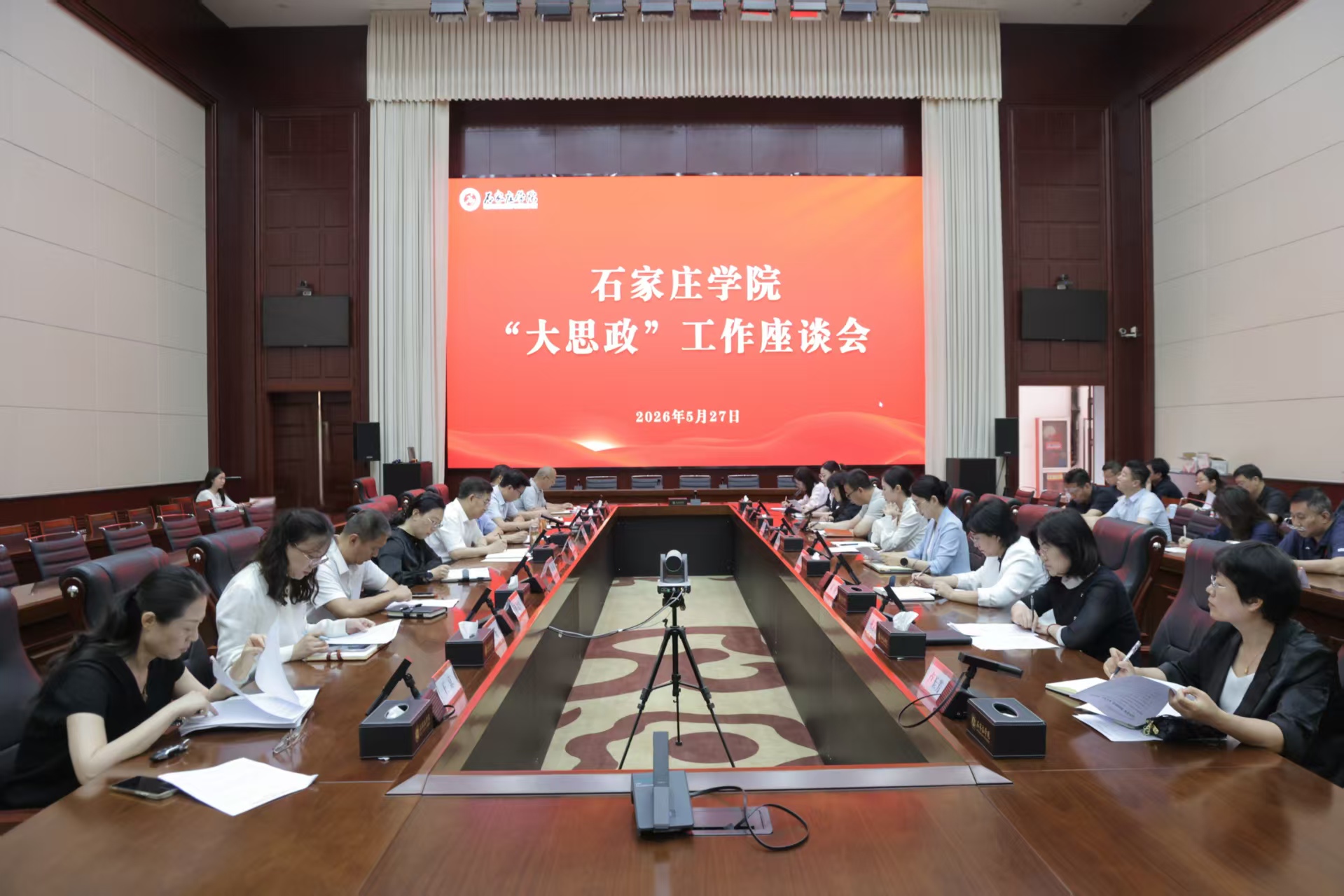
At the meeting, nine representatives—Lu Yufang, Party General Branch Secretary of the School of Marxism; Gong Zhijuan, Deputy Director of the Academic Affairs Office; Song Yu, Deputy Director of the Student Affairs Office; Jing Ying, Deputy Party General Branch Secretary of the School of Teacher Education; Jiao Xuping, Counselor of the School of Future Information Technology; Liu Gang and Zhang Tianzi, faculty members of the School of Marxism; Gu Dandan, faculty member of the School of Chemical Engineering and Biotechnology; and Yang Lihong, faculty member of the School of Economics and Management—delivered speeches in turn. Drawing on their respective departmental functions, the distinctive educational approaches of their faculties, and front line teaching and management practices, they shared innovative methods and insights on topics such as the reform and innovation of ideological and political education courses, curriculum-based ideological and political education, practical education models, and management-service-oriented education. They also offered constructive suggestions and recommendations for advancing the university-wide implementation of “comprehensive ideological and political education”.
In his concluding speech, Chen Liang fully affirmed the achievements of the school in ideological and political work in recent years and pointed out the prominent problems that currently exist in the work. Regarding the construction of the “Big Ideological and Political” system, Chen Liang put forward three clear requirements. One is to elevate the political stance and use inspection and rectification as an opportunity to build a solid ideological foundation for the “Big Ideological and Political” ideology. We must deeply recognize that promoting the construction of the “Big Ideological and Political Work System” is not a “multiple-choice question” but a “must answer question”, not a “soft task” but a “strong responsibility”. It is not only the core grasp of implementing the fundamental task of cultivating morality and talents, but also the key measure to solve the problems of inspection and rectification, fill the gaps in education, and promote the high-quality development of schools and cultivate new talents of the times as a strategic project. The second is to focus on core tasks and integrate moral education and talent cultivation into all aspects of the “Big Ideological and Political Education” construction process. To achieve the goal of educating everyone, throughout the entire process, in all aspects, and in all fields, truly forming a work pattern of educating everyone, all the time, all the places, and all the things, and truly achieving full coverage and absence of the main body of education; full cycle of education time, without interruption; the educational space covers all scenarios without blind spots; the field of education is fully penetrated without any shortcomings. Defend the main battlefield and promote the reform, innovation, quality improvement, and efficiency enhancement of ideological and political courses; expand the main channels and promote the deepening and implementation of ideological and political education in the curriculum; activate the big classroom and promote the integration of practical education with knowledge and action. The third is to strengthen the system concept and build a collaborative and efficient “Big Ideological and Political Education” work operation system. The key to the construction of “Big Ideological and Political Education” lies in the “big”, the core lies in the “coordination”, and the fundamental lies in the “practicality”. We must resolutely break down departmental barriers, disciplinary barriers, and barriers inside and outside the classroom, and build an integrated “Big Ideological and Political Education”work pattern with unified leadership of the Party committee, joint management of the Party and government, collaborative efforts of departments, and collaborative participation of all staff. Establish a sound coordination mechanism and strengthen the main responsibility; build a strong team of educators and stimulate endogenous motivation; Improve evaluation orientation and establish clear benchmarks; empower digital transformation and enhance work efficiency.
Ji Lihuai made specific arrangements to implement the spirit of this meeting. He emphasized the need to quickly convey the spirit of the learning conference, unify ideological understanding, and effectively shoulder the political responsibility of ideological and political education; secondly, we must adhere to problem oriented bench marking and rectification, conduct inspections and rectification of tasks and shortcomings, and rely on the school’s characteristic education platform to solve difficulties in education work; we need to strengthen departmental collaboration and linkage, establish the school wide “one game” ideology, break down work barriers, and gather strong forces for education.
(Contributed by: Propaganda Department; Written by: Wen Jingjing)



 stamp
stamp